In this article
I need to tell you about the version of the digital nomad life in Bali that nobody warns you about. The one where your day looks incredible on paper but is genuinely exhausting to live.
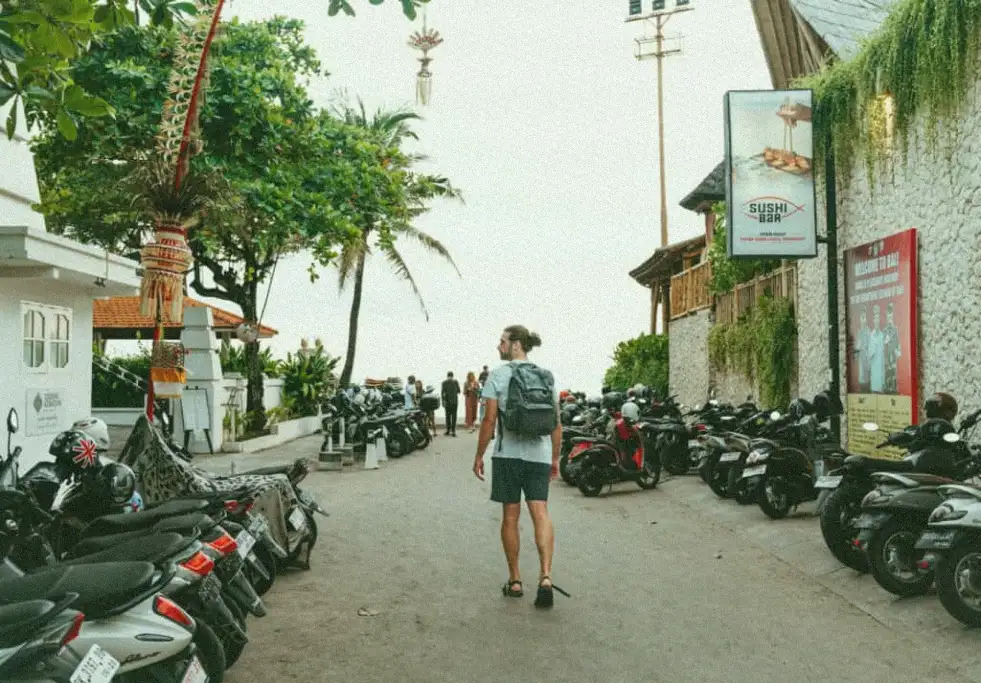
My first few months here went something like this. Wake up in my villa. Scooter to a cafe for a morning work session. Realize the cafe only serves breakfast, so pack up and ride to a different spot for lunch. Try to squeeze in a gym session at a separate facility across town. Sit in Canggu traffic getting mildly stressed. Find another place for dinner. Go to bed tired from logistics, not from productivity. Repeat.
I am someone who needs a certain amount of structure to feel grounded. Not rigid structure, just enough that I am not constantly asking myself “where do I go next?” That daily decision fatigue was quietly draining me, even in paradise.
The solution turned out to be surprisingly simple. I just needed to eliminate the friction between productivity, wellness, and everyday life, so that all three could actually coexist in the same place.
This is how I found my rhythm, and what I have learned about why the smartest nomads in Bali are slowing down to speed up.
I am not the kind of person who wings it. I like having my systems in place before the chaos starts. So before I even booked my flight, I spent weeks researching exactly which tools I would need. And after months of actually living and working here, I can confidently say that the “work from a beach with a coconut” narrative is total fiction. But working from Bali with the right setup? That is very, very real.
I want to walk you through the full stack I rely on, because I genuinely wish someone had done this for me before I arrived.
Why I Stopped Moving and Started Thriving
I will admit something. When I first became a digital nomad, I was obsessed with the movement part. New country every few weeks. New coworking space, new friend group, new favorite restaurant. It felt exciting and spontaneous and free.
Until it did not.
Constantly relocating introduces a specific kind of fatigue that quietly erodes both your professional output and your mental health. Every new city means finding reliable internet, adapting to a different time zone, establishing new routines, and navigating unfamiliar bureaucracies. After a while, the logistics of being “free” started consuming more energy than my actual work.
That is when I discovered slowmadism, a growing movement among remote workers who choose to settle in one place for months, sometimes years, rather than hopping between cities every few weeks. They build sustainable routines. They integrate with the local community. They form real friendships, not just WiFi-sharing acquaintanceships.
For someone like me who is naturally introverted but genuinely loves connecting with people once I feel comfortable, the slowmad lifestyle was a revelation. It gave me the time and space to go from “new girl at the coworking space” to someone who actually belonged somewhere. The benefits compounded across every part of my life.
Financially, negotiating a long-term villa lease in Canggu costs dramatically less per month than booking short-term stays. The savings freed up capital for the experiences and tools that actually improved my quality of life.
Professionally, staying geographically stable means my work schedule stays consistent. No more losing three days to travel logistics every time I switched cities. My clients and collaborators can rely on me being available during predictable hours.
Psychologically, building a local routine and a real social network combats the isolation that fast-paced travel inevitably creates. I went from being a permanent visitor to someone who has a favorite table, a morning routine, and friends who text me to check in. That grounding changed everything.
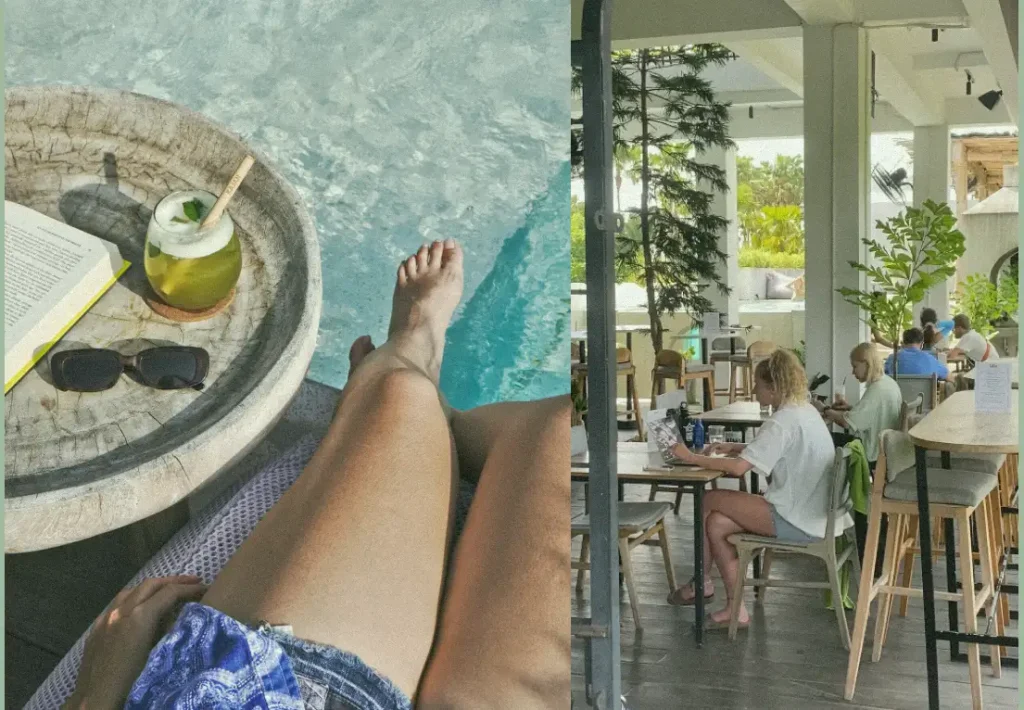
My typical day now is to wake up early, walk to AT 06, work until about 2 PM, then spend the afternoon surfing, exploring a temple, or honestly just sitting quietly with a book and a cold drink. That routine only holds because I stopped constantly rebuilding my infrastructure from scratch.

How Wellness Became Part of My Remote Work in Bali
Something shifted in how I think about health after I settled into Bali. Wellness stopped being the reward I gave myself after a hard week. It became the system that makes the hard week possible in the first place.
Bali’s spa and wellness industry has expanded by over 160% since 2003, with approximately 390 dedicated spas currently operating on the island. But the real change I have noticed is about how physical wellness gets woven into the daily professional routine, rather than kept separate from it.
I used to think of exercise as something I would “try to fit in” if I had time. Living here taught me that sustained cognitive output, which is just a way of saying deep, focused mental work over long periods, requires biological maintenance. A morning resistance training session or even a cold water immersion protocol is now scheduled in my calendar with the same seriousness as a client presentation.
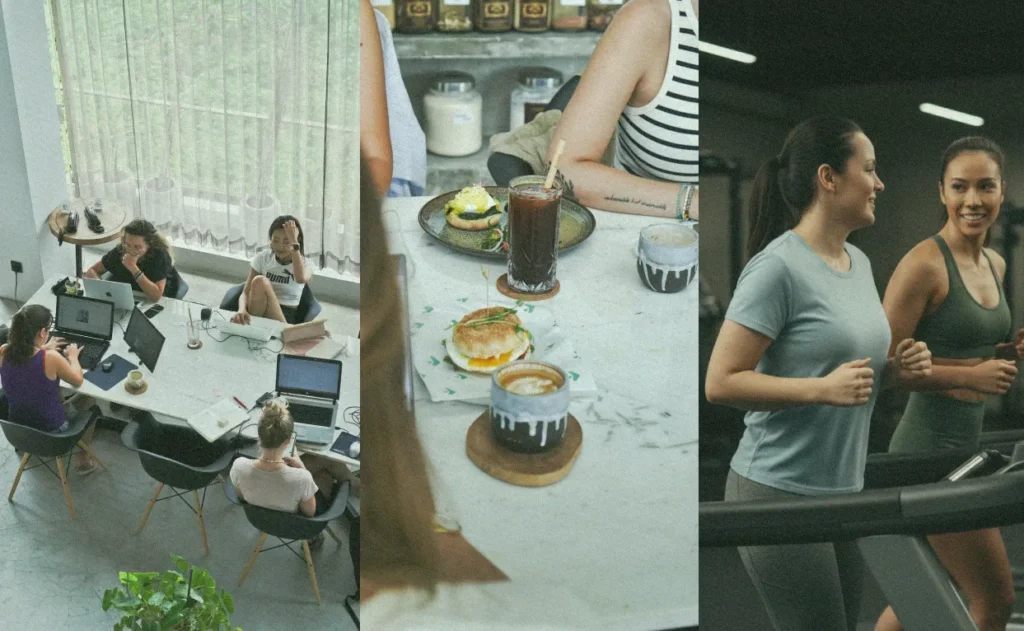
This is structurally visible across Canggu in the rise of multi-purpose facilities that combine fitness centers, coworking spaces, and recovery lounges under one roof. The traditional split between “work time” and “life time” is being replaced by a holistic daily flow, one where movement, nutrition, focus, and rest all feed into each other as interconnected parts of the same system.
And what surprised me most was that the wellness infrastructure in Canggu also became my primary way of building community. As someone who does not naturally walk up to strangers at networking events, I found it so much easier to connect with people through shared physical experiences. A morning gym session. A recovery ice bath where everyone is equally miserable and laughing about it. Social bonds formed through shared sweat feel more genuine than anything that happens over small talk at a bar.
Why Cafes Stopped Working for Me
Bali has no shortage of spectacular cafes. Many of them have genuinely excellent coffee, beautiful design, and reasonable internet speeds. I loved them at first. But using a cafe as my primary workspace introduced friction points that accumulated throughout every single day.
What I learned over time is that a productive workspace actually needs stable, high-speed connectivity that can handle video conferencing and large file transfers without dropping. Some Canggu cafes deliver this beautifully. MIEL records speeds of 52 Mbps down and 35 Mbps up. HOME Cafe hits 100 Mbps. But consistency across peak hours is another story entirely.
Beyond WiFi, you need seating designed for extended work sessions and enough power outlets to last beyond your laptop’s battery life. Running out of charge during a client call introduced a kind of stress I really did not need. Cafes also need to balance ambient creative energy with the ability to focus, and when the table next to me is on their third FaceTime call and the DJ has started the afternoon set, deep work becomes impossible. I can handle some background noise, but there is a threshold where my concentration just evaporates.
And then there is the food problem. A genuinely productive session spans hours. If the cafe only serves breakfast items, you are forced to pack up and relocate at lunchtime. That interruption breaks your flow state, that deeply focused mental zone where hours feel like minutes and your best work happens, and costs you time in traffic.
Dedicated coworking spaces like Dojo Bali, Outpost, and Tropical Nomad solve many of these issues with soundproof call rooms, ergonomic furniture, and guaranteed high-speed fiber. But they typically require membership commitments and can feel a bit cold if you are someone who needs warmth in your environment to do your best thinking.
What if you did not have to choose?

The Space That Fixed My Remote Work in Bali
The most advanced evolution of Bali’s remote work infrastructure addresses the exact friction I was experiencing. Instead of scattering your productive hours across separate locations, what I think of as the holistic hub model integrates all the core pillars of the nomad lifestyle into a single seamless environment. The idea is simple: instead of commuting between a cafe, a gym, a restaurant, and a coworking space every day, one place handles all of it. Productivity, physical fitness, nutritional optimization, and community, all in one place.
AT 06 in Canggu is where I finally stopped feeling scattered. Let me walk you through what my typical day actually looks like now.
The Workspace
Unlike traditional coworking spaces requiring contracts and advance bookings, AT 06 operates on a frictionless walk-in model. If I spend at least 150,000 IDR at the restaurant on food and drinks, my coworking desk for the day is included. That is roughly the cost of my normal lunch.
If you want a structured pass, pricing is simple. Daily passes run 100,000 IDR, and come with high-speed WiFi, second floor indoor access, and a 10% FnB discount. Weekly passes at 500,000 IDR add 1 hour of Skype room and 2 hours of meeting room access daily. The monthly pass at 1,800,000 IDR offers the same benefits and is the best value for slowmads like me.
The WiFi is genuinely fast. The seating is ergonomic. And because the space is designed for professionals who are actually working, the ambient energy supports focused deep work. I usually settle into a spot on the second floor, put my headphones on, and lose track of time in the best possible way.

The Kitchen
This is where the holistic model starts to separate itself from a regular coworking space with a coffee counter. The Kajan Eatery at AT 06 serves a full Western and Asian fusion menu with genuine nutritional transparency, and honestly, the food was one of the first things that made me fall in love with this place.
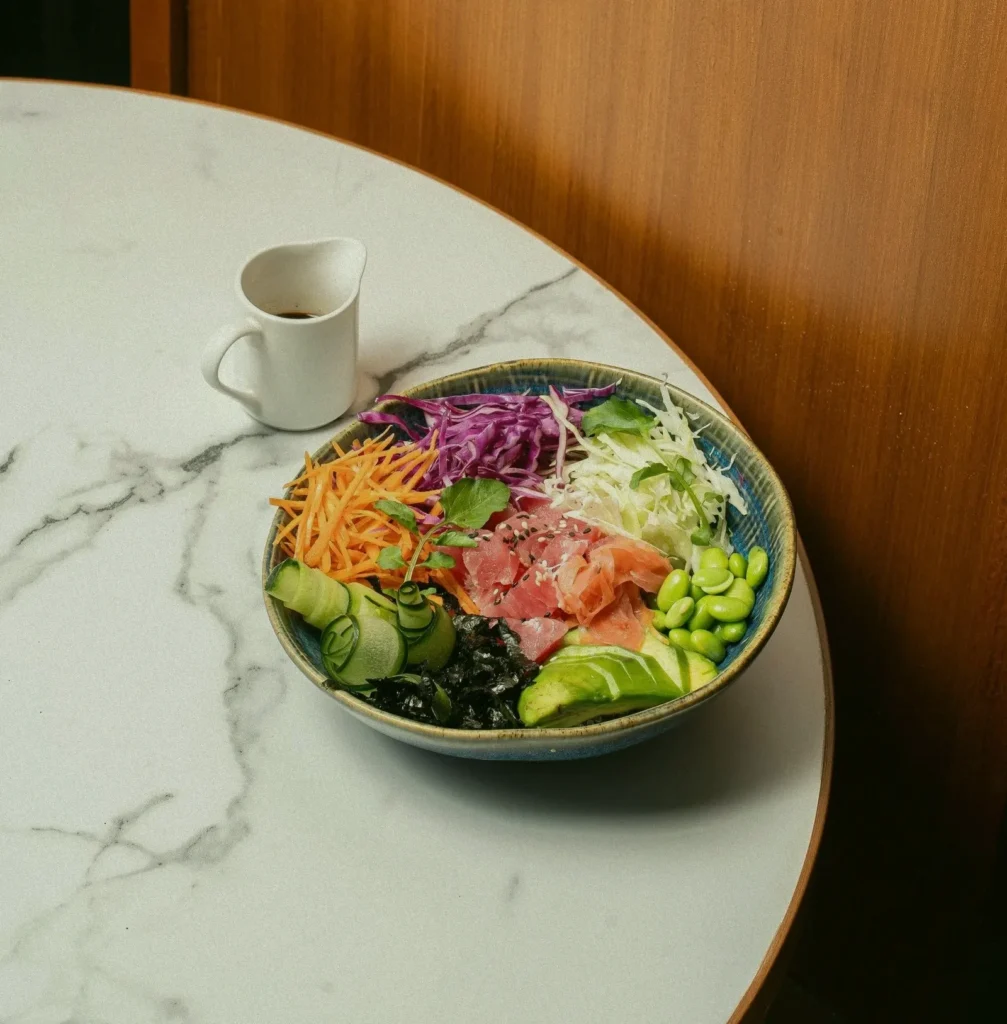
For sustained energy during a long work session, I am not limited to pastries and flat whites. My go-to lunch is the Sticky Ginger Tempeh with coconut fried rice at 60,000 IDR. It delivers clean energy without the post-lunch crash that used to derail my afternoons. When I want something more substantial, the Salmon Fried Rice at 105,000 IDR is a proper meal designed for a high-output afternoon.
When I need to fuel up for or recover from a serious training session, the Train at Six gym menu is dialed in for performance.
- Chicken Satay is my post-workout staple at 60,000 IDR. It packs 68 grams of protein with zero-sugar peanut sauce and red rice lontong.
- Chicken Roulade delivers 40 grams of protein in 536 calories, with brown rice and beef gravy at 75,000 IDR.
- Tofu Salad is my lighter option at 60,000 IDR for days when I want something clean, with 17 grams of protein and just 323 calories.
- Protein Smoothies come in Mango Tart Cherry, Choco Peanut Butter, and Blueberry Walnut at 75,000 IDR with vegan and gluten-free options available. The Choco Peanut Butter one is dangerously good.
The specialty coffee is recognized as some of the best in Bali, and I am honestly a little spoiled by it now. A Flat White runs 30,000 IDR. An Americano is 25,000 IDR hot or 30,000 IDR iced. And if I have earned an evening cocktail, the Vietnamese Martini with vodka, coffee bean, and condensed milk at 125,000 IDR is my absolute favorite way to close out a productive day.

The Gym and Recovery Zone
The defining element that elevates AT 06 beyond a coworking space with good food is Train at Six, the on-site gym. It is equipped with certified strength and conditioning equipment, treadmills with scenic views, and full air conditioning, because training in 30-degree tropical heat without it is genuinely brutal.
But the real reason I look forward to my training sessions is the recovery zone. After lifting, I have access to a 4-degree Celsius (39 degrees Fahrenheit) cold plunge. I am not going to lie, the first time I did it, I lasted about forty-five seconds and made some very undignified sounds. But research published in the British Journal of Sports Medicine consistently shows that cold water immersion accelerates muscle recovery and dramatically improves alertness. Now I do two minutes regularly, and the brain fog from a three-hour work sprint genuinely disappears.
There is also a hot jacuzzi for contrast therapy, which is the practice of alternating between cold immersion and heat to stimulate blood circulation and speed up recovery. It is a protocol used by professional athletes, and it is available here as part of a regular membership. It feels luxurious and practical at the same time.
Gym pricing is accessible. Daily passes run 175,000 IDR, with a Recovery Area add-on at 100,000 IDR. Weekly passes are 500,000 IDR, monthly is 1,500,000 IDR, quarterly is 3,600,000 IDR, and annual comes to 9,000,000 IDR.
The practical impact of having all this in one location is significant. I can finish a focused ninety-minute work sprint, transition immediately into a training session, hit the cold plunge to reset my nervous system, grab a Chicken Satay bowl for recovery, and be back at my laptop fully recharged, all without ever starting my scooter or sitting in Canggu traffic. That cycle takes roughly two hours and replaces what used to consume half my day when I was scattered across separate locations.

Making Friends as an Introvert
I should be honest about this part, because I think it matters.
I am not the person who walks into a room and immediately starts a conversation with everyone. I need a little time to warm up. I need to see the same faces a few times before I feel comfortable being myself. Traditional networking events, the “here is my business card” kind, have always felt a bit forced to me.
AT 06 solved this problem in a way I did not expect. When you go to the same place every day, when you see the same people at the gym, at the coffee counter, at the upstairs desks, community just happens. I met someone over morning coffee who turned out to be working on a similar project. I shared an ice bath recovery session with a founder who became a genuine friend. I started going to community dinners and events at the bar and ended up in conversations that reshaped how I think about my own work.
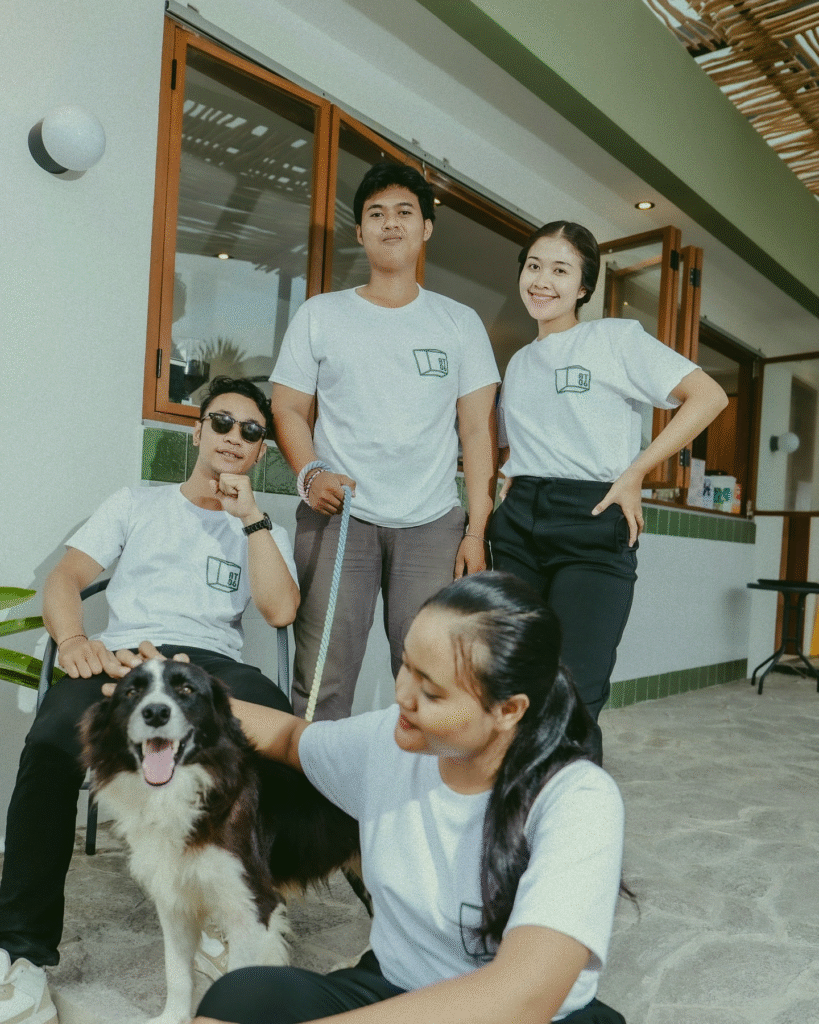
AT 06 is a female Balinese-owned space, and that care and intentionality genuinely shows. The staff knows the regulars. The atmosphere is calm but social. People talk to each other here because the environment naturally brings it about, not because anyone forces it. For someone who needs warmth and familiarity to open up, that matters more than any amenity list.
The space is also genuinely pet-friendly. I do not have a dog yet (emphasis on yet), but for the number of nomads who travel with their dogs, it is a significant quality-of-life detail. Dogs just hang out while their humans work. It honestly makes the whole place feel more like home.
AT 06 maintains a 4.9 rating based on over 1,727 reviews. Reviewers consistently highlight the seamless integration of dining, working, and wellness. The staff are frequently described as “relaxed, calm, and happy,” which, after spending time in high-pressure coworking environments, I can tell you is worth more than you might initially think.
Where Remote Work in Bali Goes From Here
The old model of the nomad’s day, scattered across separate villas, cafes, gyms, and restaurants, is being phased out. It was never designed for productivity. It was a workaround born from necessity, when no single space offered everything a remote professional needed.
The future is consolidation. Spaces that successfully integrate unrestricted coworking, high-performance fitness and recovery, nutritionally optimized dining, and organic community architecture will set the standard for how location-independent professionals live and operate globally.
The ultimate luxury in Bali is the complete absence of logistical friction between doing your best work and living your best life. I know that sounds like a big claim. But after experiencing the difference firsthand, I genuinely believe it.
AT 06 is that kind of place for me. And I think it could be for you too.
Come find us near Echo Beach in Canggu. We are open every day, 6 AM to 10 PM. Bring your laptop. Bring your dog. I will probably be upstairs with my headphones on, but I promise I will wave if you catch my eye. And the cold plunge is always ready, even if you are not.
The AT 06 Model
AT 06 in Canggu is where I finally found my rhythm. The coworking space operates on a frictionless, walk-in access model. There are no contracts and no advance bookings required. If I spend at least 150,000 IDR on food and drinks at the restaurant, my desk for the day is included. That is roughly the price of a Flat White (30,000 IDR), a Sticky Ginger Tempeh bowl (60,000 IDR), and a Stay Cooler mocktail (45,000 IDR), which is basically my normal lunch anyway.
If you prefer a structured pass, pricing is straightforward. Daily passes run 100,000 IDR, weekly is 500,000 IDR, and monthly is 1,800,000 IDR. Every pass includes high-speed WiFi, second floor indoor access, and a 10% discount on food and beverages. Weekly and monthly passes add dedicated Skype room access and meeting room hours.
The WiFi is fast and stable. The seating is designed for extended sessions. And because AT 06 integrates a full restaurant, gym, recovery facilities, and community events under one roof, I never have to pack up and relocate when my needs change throughout the day. I can go from a focused work session to a proper lunch to a quick gym session without ever leaving the building. For someone who hates the daily “where do I go next?” decision fatigue, this was transformative.

See similar topics